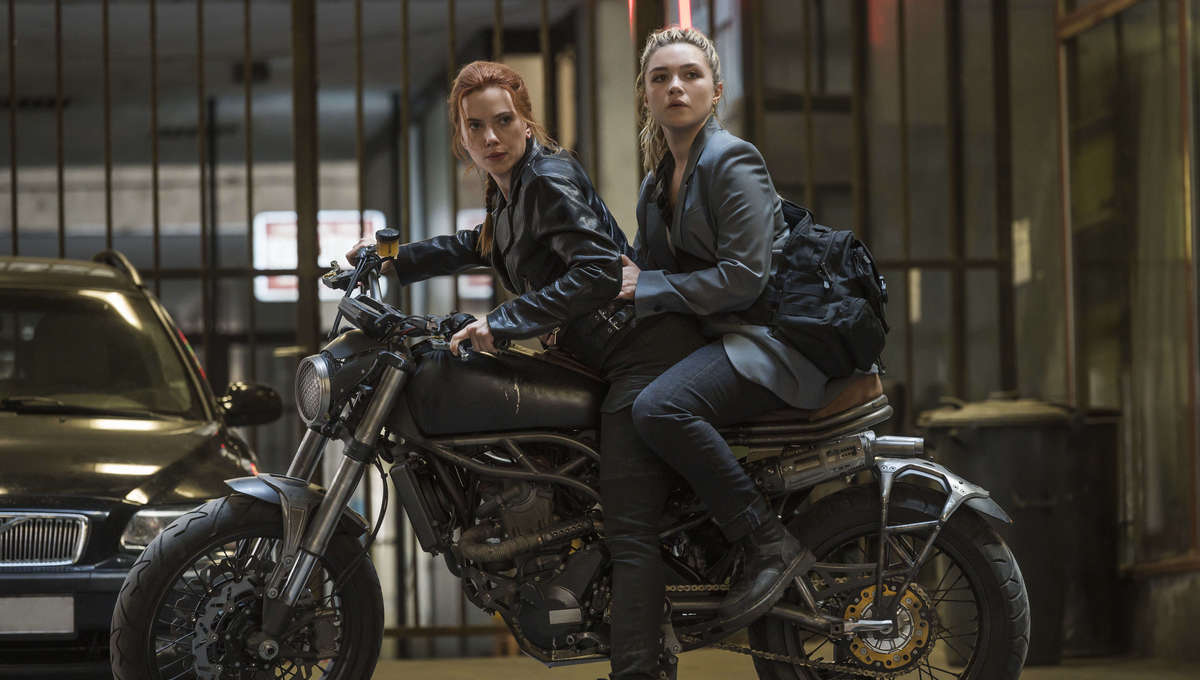
After years of fan speculations and desires, Marvel finally delivers on the promise of a solo Black Widow film.
Having appeared as part of an ensemble in eight films, Scarlett Johansson returns as the beloved character in (at last) a central role.
Postponed three times due to the pandemic, Black Widow is the first in the Marvel’s next slate of films.
Chronologically, the film is set after Captain America: Civil War, and sees Natasha Romanoff as a fugitive on the run, having violated the superhero regulatory act known as the Sokovia Accords.
A mysterious attack finds Romanoff confronting her past as a Black Widow, leading her to team up with her sister-figure Yelena Belova, and her surrogate parents Alexei Shostakov – the Red Guardian, and Melina Vostokoff, a seasoned Black Widow, in order to take down a mysterious assassin and an entire army of Black Widows.
Black Widow represents a change of pace for the Marvel series of films. Having explored larger than life, fantastical narratives involving magic and the cosmos in the past entries, the film is grounded and features an appropriately mature tone and at its core, is a gritty spy-thriller, akin to Captain America: The Winter Soldier.
The film starts out promising with an intriguing prologue, and followed by an engaging and action-packed first act. However, the plot quickly loses its footing soon afterwards, with its momentum derailed and riddled with pacing issues, concluding with an underwhelming and rushed finale.
While the film does do a great job of setting up the world and the tone one can expect from the film (mostly attributed to a harrowing and haunting opening credits sequence) atypical of a Marvel film, Black Widow nonetheless manages to fall prey to many problems that have been plaguing the series for years. Issues such as forcefully injected humor, numerous cartoon-ish moments, poor visual effects and weak characterizations of its antagonists that wastes their potential leaves the film feeling highly inconsistent, predictable, jarring and ultimately disappointing.
Black Widow also sheds light on key events from Natasha’s past as a ruthless assassin, having only been alluded to at this point in prior films. However, the film fails to address them thoroughly, and leaves viewers unsatisfied with as many questions as before.
Aside from the film’s storyline, Black Widow additionally suffers because of its long-overdue release. As a prequel, the film takes place before Natasha’s journey and ultimate demise in Avengers: Infinity War and Avengers: Endgame. Therefore, the character’s solo film rings hollow in terms of lasting stakes and ramifications throughout the series, and one is left wondering regarding what the film adds to its titular character.
Keeping in line with previous Marvel films, the new entry also attempts to comment on many sociopolitical issues (such as child trafficking) plaguing the world, but are ultimately neglected in favor and in service of the larger, overarching narrative of the Marvel canon, devoting and concerning itself with setting up Florence Pugh’s future in the franchise as Yelena Belova.
Coming to the performances, Scarlett Johansson remains as committed as ever, but one wishes she had better material in order to build her performance. Johansson and her performance feel dishearteningly sidelined more than ever, even in her own film, continuing the Marvel films’ streak of mishandling and lacking in definitive treatment of the character.
Florence Pugh serves as the highlight and stands out through her performance as Yelena. She effectively alternates from a dramatic performance to one laced with one-liners delivered with ease. Her chemistry and dynamic with Natasha is yet another highlight of the film, and makes a compelling case to watch out for her character in forthcoming films and television series.
While Pugh overshadows the central character through her performance, the combined acting talents of David Harbour and Rachel Weisz as the surrogate parents are not utilised thoroughly and are wasted in their characters and performances.
Composer Lorne Balfe of Mission: Impossible – Fallout fame elevates a typically sounding Marvel musical score through his skillful flourish, opting to incorporate traditional Russian music in his composition, ultimately taking the film’s aesthetics to a new and different direction.
Overall, Black Widow would have benefited from a stronger story line, a more focused approach towards its main character, and a shift in period setting, having far more weight in terms of being emotionally satisfying for the audience and having a larger role in the story of the Marvel universe going forward.
On a final note, Black Widow will prove to be enjoyable to those who are willing to look past its faults. However, it may be disappointing to the viewers deeply attached to the Marvel canon, and hoping for some questions answered regarding Natasha Romanoff as a character. Positively, the film (somewhat) suggests a mature shift in style and tone for coming films.
Despite being underwhelmed, I would be lying if I said I did not miss the familiar thrill and excitement that comes with watching a Marvel film after more than two years.
 Texts of A Pop Culture Buff