
The year was 2002. Giving an opening speech that served as the prologue of the 74th Academy Awards, also known as The Oscars, renowned veteran actor Tom Cruise asked the question: what makes a movie unforgettable? “A little bit of magic,” remarked Cruise in response. He cited how films were his “lifesaver” regardless of the situation, good or bad. Cruise went on to refer to the tragic September 11 attacks that had occurred mere months prior, going on to question his importance in his field as an actor.
“Should we celebrate the joy movies bring at a time like this?”, inquired Cruise to an onlooking audience. “Well dare I say it, more than ever,” he answered firmly.
“A small scene, a gesture, even a glance between characters can cross lines, break through barriers, melt prejudice, just plain make us laugh. Brings us all together, that little bit of magic.”

Fast forward to the third decade of this new millennium, the Covid-19 pandemic that raged throughout the world in 2020 resulted in lockdowns globally, in an attempt to prevent further outbreaks of the virus. The scenario brought on by the pandemic lockdowns resulted in the triggering of mental health issues, anxieties, and insecurities.
Films and television series, just like they always have, and in a similar stance to what Tom Cruise stated, provided a sense of escape, comfort, relief, and a semblance of normalcy to its viewers.
The Hollywood Reporter, an American digital and print magazine that focuses on reporting on the entertainment trade industry, surveyed adult respondents in the United States in March 2020, enquiring about the genres of film and television they had watched the most during the lockdown period.
The survey was conducted in an online format over three days from March 19 to 21. It had a total of 1746 respondents who were aged 18 years and older. The genres of film and television surveyed were action/adventure, drama, comedy, thriller/mystery, horror, science fiction/fantasy, documentary, reality, food/nature, and science/travel.

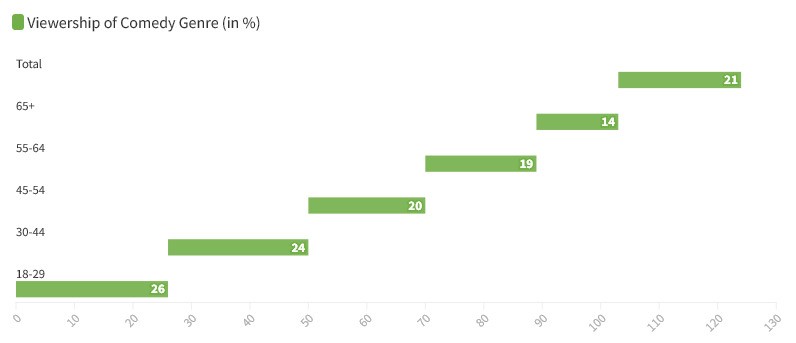
The results revealed that comedy was the most viewed genre by 21 percent of adult viewers in the United States. The genres of action/adventure and drama were ranked second, with 11 percent of viewers each.

Talking about the purpose films and television serve during a time of crisis, Shravya Nair, a Bangalore based counsellor and teacher of psychology said it was a means by which people could improve their resilient states during the pandemic. “As they indulged in such media, they were not just reducing their exposure to the virus but also mentally distancing themselves from the horrid reality,” she said.
Apart from the main need that essentially boiled down to escapism, Nair cited factors such as lower levels of experiencing loneliness and higher forms of self-esteem that are related to stronger resilience during the pandemic which drove people to consume more media than they did before.

Within the 21 percent of viewers who viewed comedy as their preferred genre of film and television, most viewers (26%) belonged to the age group of 18-29. “The viewers in the age group of 18 to 29 years have not necessarily witnessed a crisis on such a global massive scale before and their lives have not been turned over in the span of a few days,” Nair said. She added how, to escape and relieve themselves from the fear of the situation, viewers choose to turn to comedy for emotional relaxation and withdrawal.
While only 5 and 6 percent of total respondents reported having viewed the genres of thriller/mystery and horror, respectively, the most viewership of these genres stemmed from the aforementioned age group of 18-29 years of age at 6% and 12%.
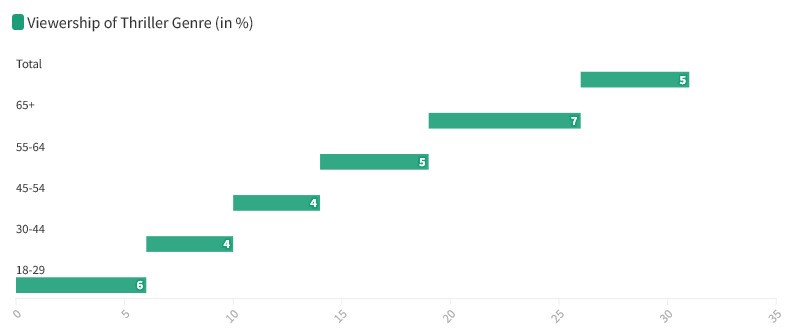

Nair attributes the viewership to a phenomenon known as morbid curiosity, which is typically exhibited by people aged from 22 to 35. Morbid curiosity pertains to interest or fascination with unpleasant subjects such as death and violence, which is brought on and accentuated by images in the news, and entertainment media content such as horror and true crime.
The 2011 film Contagion, starring Matt Damon and Kate Winslet received renewed interest and high viewership in the wake of the Covid-19 pandemic due to its accurate and similar portrayal of a pandemic. Nair stated that people who engaged in morbid curiosity were naturally drawn to the film, and likewise moved on to other similar content.

People aged 65 years and beyond reported to have the highest (21%) viewership within the genre of drama. Nair referred to psychologist Erik Erikson’s theory of psychosocial development as a possible explanation behind the viewership. Erikson’s theory outlined numerous stages and conflicts in psychosocial development occurring throughout the lifespan of a person. According to his theory, people aged 65 and above are generally in a state of integrity, reflecting upon their life and carrying a sense of acceptance, wholeness, lack of regret, peace, and success.
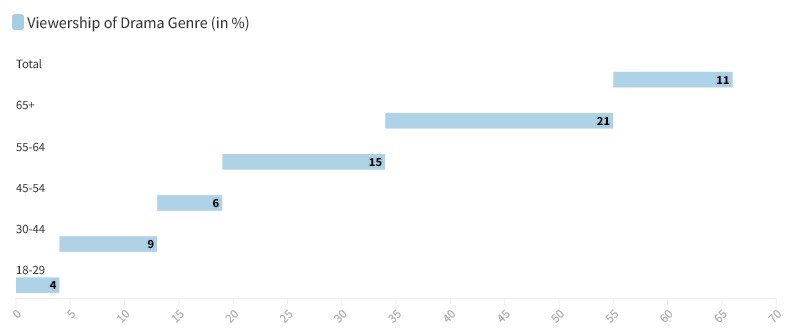
Nair says, “Since drama turns its focus towards relationships, viewing the genre helps instigate relatability within the age group, helping them compare and contrast the storyline and plots with their lives.” Those in the 45-65 age bracket, Nair continued, are looking at how well they have achieved in their professional and personal spheres – being able to maintain relationships and provide for their children. “The focus of drama on relationships will help them reflect on theirs, helping them move successfully to the next stage where they integrate all the aspects of their life,” she said.
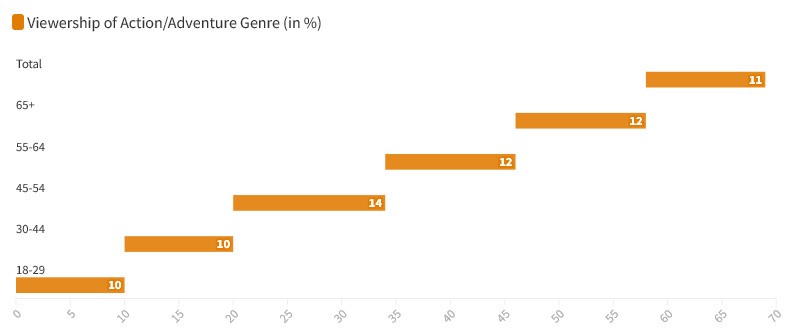
Within the action/adventure genre which recorded a viewership of 11% of total respondents, 14% of viewers were aged 45-54, the most when compared to the rest of the age groups. The life span development branch of psychology has reported a drastic shift and decline in metabolism levels of people in their 40s. Nair correlates the viewership of action and adventure-based entertainment content to this phenomenon. “To boost their self-esteem which is lowered due to their declining health, viewers turn to such media to serve as a source of self-motivation, improving their well-being in the process.”


With regards to the viewership of the genres of food/nature and science/travel at 4 and 2 percent, Nair stated that the cause of such a low viewership was not the fault of the content presented, but rather the effect it had on the audience. “It’s not that the genres of food and travel were not worth watching, but the comfort provided by the genres were lesser in comparison to the other categories,” she said, adding that they were viewed less due to them serving a reminder of what audiences were missing out on due to the pandemic.
Special Thanks to Shravya Nair.
Additional Inputs by Thanmaya Prakash, Gabriella Symss and Moksha Garg.
 Texts of A Pop Culture Buff